
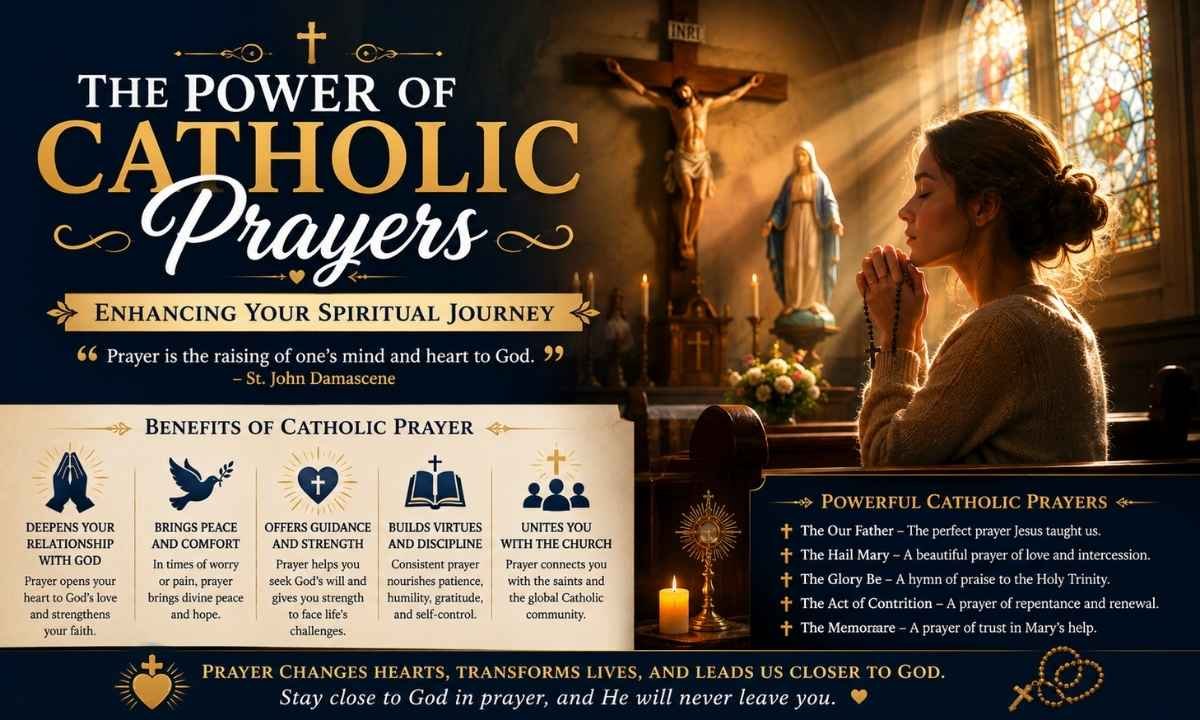
Catholic prayer isn’t just repetition for the sake of tradition, it’s a structured way of staying connected to God through every part of daily life. If you’ve ever wondered why the Rosary or a novena feels different from a quick, spontaneous prayer, the structure itself is the point. ✨
This guide breaks down why Catholic prayers exist, the main types every believer should know, and simple ways to make your own prayer life feel less mechanical and more meaningful.
Understanding the Purpose of Catholic Prayers 📜
Catholic prayer isn’t a single activity, it serves several distinct purposes depending on what your heart needs in that moment. Recognizing which purpose you’re reaching for often makes the prayer itself feel more intentional.
Worship and Adoration
This form of prayer centers on honoring God simply for who He is, not for anything being requested. It’s less about asking and more about acknowledging His greatness with genuine humility.
Petition and Supplication
This is the most familiar form for most people, bringing specific needs, fears, or hopes directly to God. Healing, guidance, and comfort during hardship all fall under this category.
Thanksgiving
Gratitude-based prayer shifts focus away from what’s missing and toward what’s already been given. Many believers find this type steadies their mindset faster than any other.
Repentance and Reconciliation
This form of prayer involves honestly naming where you’ve fallen short and seeking to restore your relationship with God. Sincerity matters here far more than formal wording.
Intercession
Intercessory prayer means praying on behalf of someone else, whether that’s a family member, a stranger, or even someone who has caused harm. It reflects a desire to extend compassion outward.
Types of Catholic Prayers Every Believer Should Know
| Prayer Type | Core Focus |
| The Lord’s Prayer | Complete prayer taught directly by Jesus |
| Hail Mary | Honors Mary, seeks her intercession |
| The Rosary | Meditative reflection on Christ’s life |
| Divine Mercy Chaplet | Focuses on God’s mercy and compassion |
| Novena Prayers | Nine consecutive days of focused petition |
The Lord’s Prayer (Our Father)
Taught directly by Jesus, this prayer is often considered the complete model for Christian prayer, covering adoration, petition, thanksgiving, and repentance in a single short passage. It’s recited during Mass and forms the backbone of most daily Catholic prayer routines.
Hail Mary
This prayer honors the Virgin Mary and asks for her intercession, combining an angelic greeting with a direct request. It plays a central role within the Rosary and is one of the most repeated prayers in Catholic practice.
The Rosary
The Rosary walks through key moments in Christ’s life while repeating the Our Father, Hail Mary, and Glory Be. The repetition isn’t mindless, it creates a steady rhythm that many Catholics find calming during genuinely stressful seasons.
The Divine Mercy Chaplet
This prayer centers specifically on God’s mercy, repeating phrases that ask for compassion and forgiveness. It’s often prayed during moments of personal struggle or when interceding for someone else going through a difficult season.
Novena Prayers
A novena involves praying the same intention for nine straight days, often asking for a saint’s intercession or a specific grace. This structure appeals to people who want their prayer life to feel focused rather than scattered.
Catholic Prayer Traditions Gaining Attention on Social Media 📱
Faith content has grown quickly across TikTok and Instagram, and Catholic prayer traditions like the Rosary and novenas are increasingly showing up in short, accessible video formats. Younger believers especially seem drawn to seeing centuries old prayer structures explained in under a minute.
This trend hasn’t replaced traditional practice, if anything it’s introduced structured Catholic prayer to people who might never have picked up a prayer book otherwise.
Common Struggles People Face With Catholic Prayer
Even lifelong Catholics run into a few recurring challenges that can make prayer feel less connected over time.
- Reciting familiar prayers on autopilot without reflecting on the words
- Only turning to novenas or the Rosary during a crisis
- Feeling unsure whether repetition counts as “real” prayer
- Struggling to stay consistent without a set routine
Recognizing these patterns is usually the first step toward addressing them, often just slowing down during one decade of the Rosary can restore a sense of genuine focus.
Enhancing Your Prayer Life
Structured prayer becomes more meaningful with a few intentional habits layered on top of it.
- Find a Sacred Space: A quiet, distraction free spot, whether a home corner or a church pew, helps prayer feel less rushed.
- Establish a Routine: Praying at the same time daily builds consistency faster than relying on motivation alone.
- Use Prayer Resources: Devotionals and prayer books can introduce new novenas or reflections worth exploring.
- Engage in Reflective Prayer: Pausing on the meaning of familiar words keeps repetition from becoming mechanical.
- Seek Spiritual Guidance: A trusted clergy member or spiritual director can offer direction during deeper struggles.
Frequently Asked Questions
What is the most important Catholic prayer?
The Lord’s Prayer is widely considered the most complete Catholic prayer, taught directly by Jesus and covering adoration, petition, and repentance together.
How is the Rosary different from other Catholic prayers?
The Rosary combines repeated prayers with meditation on specific moments in Christ’s life, creating a structured, reflective rhythm.
What is a novena and how long does it last?
A novena is a series of prayers said for the same intention over nine consecutive days, often seeking a saint’s intercession.
Is repeating the same prayer considered meaningful?
Yes, repetition in Catholic tradition is meant to quiet the mind and deepen focus, not to replace sincerity with routine.
Can Catholic prayers be personal and spontaneous too?
Yes, structured prayers and personal spontaneous prayer often work together, with one supporting the other throughout the day.
Who can I pray to besides God in Catholic tradition?
Catholics often seek the intercession of Mary and saints, asking them to bring specific requests before God on their behalf.
How do I start building a consistent Catholic prayer routine?
Start small with one prayer said daily at a consistent time, then gradually add novenas or the Rosary as the habit strengthens.
Conclusion
Catholic prayer offers something rare, a structure old enough to have shaped centuries of believers, yet personal enough to meet you exactly where you are today.
Whether it’s the steady rhythm of the Rosary or the focused persistence of a novena, the goal remains the same, staying genuinely connected to God rather than simply repeating words.