

Nelson Peltz and Amancio Ortega are two billionaires whose names keep appearing in the same searches, yet they have never worked together and they are not related. Peltz is an American activist investor who buys stakes in famous companies and pushes them to change. Ortega is the Spanish founder of Zara and Inditex, who turned a single shop into the world’s biggest fashion retailer.
So why do people search for them together? Both are rich, both are well known in business circles, and both made headlines in 2026. Peltz made a $7.35-per-share bid for Wendy’s, while Ortega collected a record dividend of about €3.2 billion. This guide separates fact from rumor and compares their careers, wealth and methods using figures checked in mid-November 2026.
Quick answer: Nelson Peltz and Amancio Ortega have no family tie and no business partnership. Peltz (American, born 1942) is an activist investor worth about $1.5 billion. Ortega (Spanish, born 1936) is the Inditex founder worth roughly $145 billion, according to Forbes.
Nelson Peltz and Amancio Ortega: Comparison Table
| Detail | Nelson Peltz | Amancio Ortega |
| Full name | Nelson Peltz | Amancio Ortega Gaona |
| Date of birth | 24 June 1942 | 28 March 1936 |
| Age | 84 | 90 |
| Birthplace | Brooklyn, New York, USA | Spain (raised in A Coruña, Galicia) |
| Nationality | American | Spanish |
| Profession | Activist investor, hedge fund CEO | Founder of Inditex (Zara), investor |
| Main vehicle | Trian Fund Management (founded 2005) | Inditex and family holding Pontegadea |
| Best known for | Board fights at P&G, Disney and Wendy’s | Creating Zara and fast fashion |
| Estimated net worth | About $1.6 billion (Forbes) | About $137 billion to $140.9 billion (Forbes real-time, Oct 2026) |
| Business style | Public, confrontational, deal-driven | Private, patient, ownership-driven |
| Family | Married to Claudia Heffner Peltz; 10 children | Married to Flora Pérez Marcote; 3 children |
| Education | Briefly attended Wharton, left early | Left school as a young teenager |
| Connection to each other | None | None |
Are Nelson Peltz and Amancio Ortega Connected Through Business or Family?
Quick answer: No. Nelson Peltz and Amancio Ortega are not related, and they have no known joint investments, shared boards or business partnerships. Their careers run on different continents, in different industries, with completely different goals.
The record is simple to check. Peltz’s public filings through Trian list holdings such as GE Aerospace, Solventum and Wendy’s. Ortega’s holding company, Pontegadea, owns Inditex shares, real estate and infrastructure stakes. The two lists do not overlap, and neither man appears in the other’s ownership documents.
Here is what the evidence shows:
- No family link: Peltz comes from a Brooklyn food-distribution family. Ortega comes from a working-class family in northern Spain.
- No shared company: Neither man sits on a board connected to the other.
- No joint deal: No public filing, press release or news report shows a transaction between them.
- Different worlds: One works through Wall Street campaigns, the other through stores, supply chains and property.
There is one possible source of confusion. Peltz’s daughter, actress Nicola Peltz, married Brooklyn Beckham in 2022, which pushed the Peltz name into fashion and celebrity news. That link is to the Beckham family, not to Ortega or Zara.
How to Check Whether Two Billionaires Are Really Connected
Claims about hidden links between rich people spread fast online. A few simple checks can save you from repeating a false story, and they work for any pair of names, not only these two.
- Look for a filing: Real business ties usually appear in SEC documents, Spanish market filings or company annual reports.
- Check the board lists: Shared directors or shareholders are public information.
- Trust dated reports: Prefer Reuters, Bloomberg, Forbes or the company’s own press releases.
- Be careful with comparison pages: A page that compares two people is not evidence that they know each other.
Applying these checks to Nelson Peltz and Amancio Ortega turns up nothing. That absence is the answer.
Who Is Nelson Peltz? A Look at His Background and Career
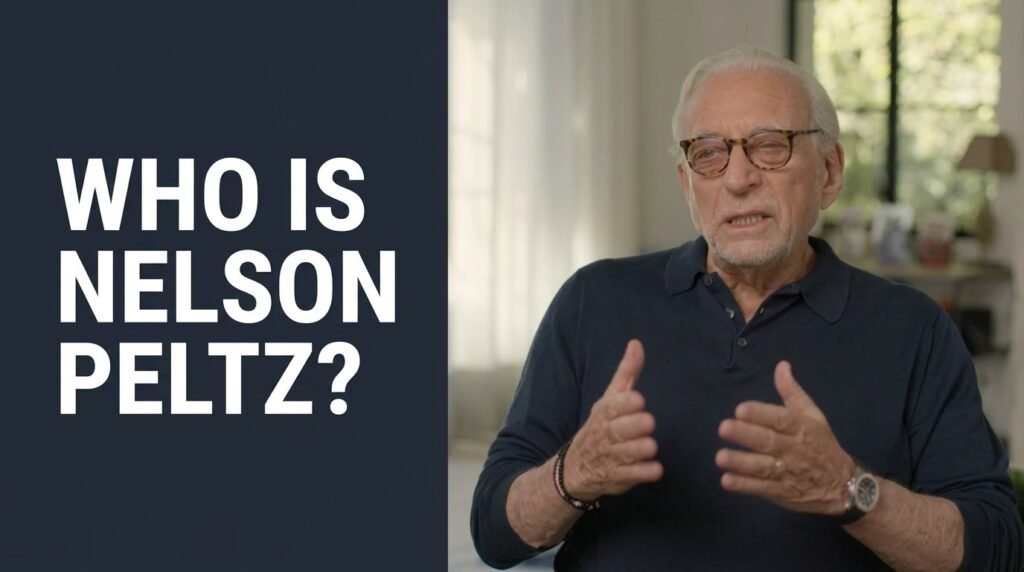
Nelson Peltz was born on 24 June 1942 in Brooklyn, New York. His family ran a food-distribution business, and he joined it as a young man after leaving the Wharton School early. He learned operations, cash flow and negotiation on the job, which later shaped how he judged other people’s companies.
In the 1980s he teamed up with Peter May and bought into industrial companies through Triangle Industries, which became a major packaging business through deals including National Can. He later ran Triarc, a restaurant and beverage group that owned Arby’s and Royal Crown. Triarc merged with Wendy’s in 2008, and Arby’s was sold to Roark Capital in 2011 so the company could focus on burgers.
Key moments in his career, in order:
- 1960s–1970s: Works in the family food-distribution business.
- 1983: Partners with Peter May and begins buying industrial companies.
- 1990s–2000s: Builds Triarc into a restaurant and consumer brands group.
- 2005: Co-founds Trian Fund Management with Peter May and Ed Garden.
- 2008: Triarc merges with Wendy’s.
- 2017: Wins a board seat at Procter & Gamble after a very tight vote.
- 2024: Loses a high-profile proxy fight at Disney.
- 2026: Completes the Janus Henderson take-private and bids for Wendy’s.
He is known for blunt language and a willingness to fight in public. Supporters call him a turnaround specialist. Critics say activist investors push for short-term gains. Both views are common in business coverage, and the results differ from one campaign to the next.
Nelson Peltz’s Family and Life Outside Business
Peltz was first married to Cynthia Abrams in 1964, and they have two children. In 1985 he married former model Claudia Heffner Peltz. Across both marriages he has ten children, several of whom work in finance, acting or sport.
His son Matthew Peltz is involved in the family’s investment world, while his son Will and daughter Nicola are actors. Nicola’s 2022 marriage to Brooklyn Beckham brought the family wide media attention. Peltz splits his time between New York and Palm Beach, Florida, and is a long-time donor to Republican causes and to healthcare charities.
What Is Trian Fund Management and How Does It Work?
Trian Fund Management is Nelson Peltz’s New York investment firm. It was founded in November 2005 by Peltz, Peter May and Ed Garden. Forbes has described it as managing roughly $8.5 billion in assets, and it holds a small number of large positions instead of dozens of small ones.
Trian follows a repeatable method. It picks a well-known company it believes is underperforming, studies the numbers, then offers a detailed plan. If management agrees, the campaign stays quiet. If not, the firm may seek board seats, publish critical letters or call for a sale or breakup.
A typical Trian campaign runs in five steps:
- Research: Find a strong brand with weak margins or slow growth.
- Stake: Buy a meaningful block of shares.
- Plan: Present a public or private improvement plan.
- Pressure: Ask for board seats, cost cuts, spin-offs or leadership changes.
- Exit or buy: Sell once value rises, or take the company private.
The last step has become more important. In 2026, Trian, General Catalyst and the Qatar Investment Authority completed the take-private of Janus Henderson on 30 June, paying $52 per share in a deal reported at about $7.4 billion. Trian’s second-quarter 2026 filings also listed GE Aerospace, Solventum and Wendy’s among its main positions.
Nelson Peltz’s Influence on Corporate Strategy
Nelson Peltz does not run the companies he targets. His influence comes from owning shares, speaking loudly and asking hard questions in the boardroom. That outside pressure has changed strategy at several household-name companies.
Some well-known examples:
- Procter & Gamble (2017): He won a board seat after an unusually close shareholder vote and pushed the company toward a leaner structure.
- Heinz, Cadbury and Kraft: Trian campaigned for cost discipline and portfolio changes at these food and drink groups during the 2000s.
- PepsiCo and DuPont: He argued for breakups and structural changes, with mixed results.
- Unilever (2022): He took a board seat at the consumer-goods giant.
- Disney (2023–2024): He fought for board seats, then lost the April 2024 vote.
His best-known ideas are simple: cut waste, focus on core brands, set clear targets and hold leaders accountable. Business schools often study his campaigns as examples of shareholder activism.
Wendy’s story is the newest chapter. On 28 October 2026, a group led by Trian, with Flynn Group, BlueFive Capital and Sixth Street Partners, offered $7.35 per share in cash, about $1.4 billion in total. On 5 November, Wendy’s independent committee unanimously rejected the offer as too low and adopted a one-year shareholder rights plan. Peltz’s group still owns roughly 16% of the company, so the story is not finished.
What the Wendy’s Standoff Could Mean Next
The rejection does not end the story. Wendy’s shares closed at $7.94 on 5 November, above the $7.35 offer, which suggests investors expect a higher bid or a stronger turnaround. The company says its new strategy, called Dave’s Way, will lift traffic and profits.
The board’s rights plan, which uses a 15% trigger and expires on 3 November 2027, makes a hostile move harder. Peltz’s group could raise its price, negotiate privately or step back. Wendy’s also cut its dividend and withdrew its 2026 outlook in August, so shareholders have real reasons to watch closely. Nothing is settled yet.
Who Is Amancio Ortega? The Founder of Zara
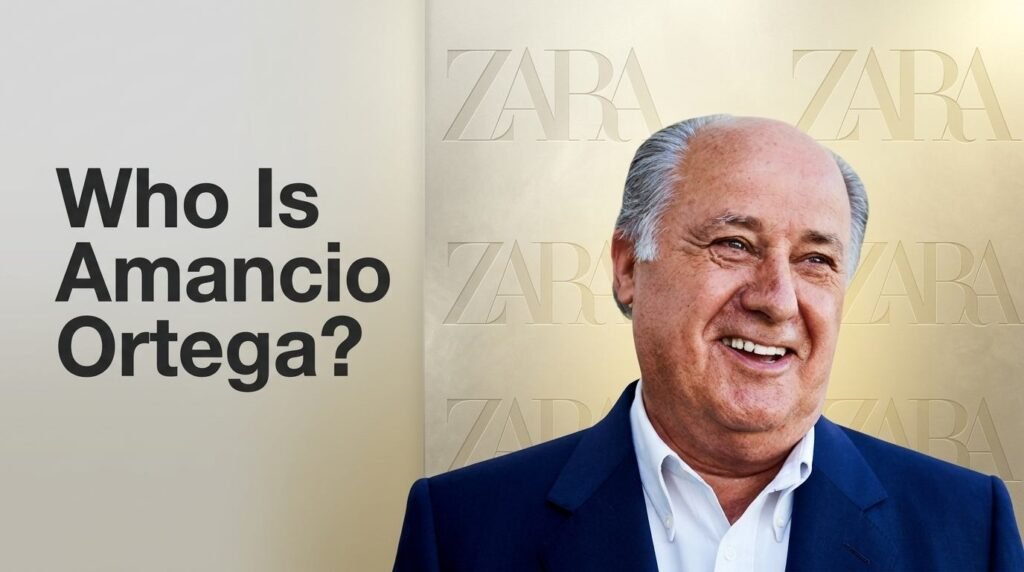
Amancio Ortega was born on 28 March 1936 and is now 90 years old. He left school at a young age to work as an errand boy in a clothing shop in A Coruña, a port city in Galicia, northwest Spain. That first job taught him how clothes are made, priced and sold.
In 1963 he started making garments, beginning with bathrobes. In 1975 he opened the first Zara shop in A Coruña. A popular story says the shop was nearly named Zorba, but a bar nearby already used that name, so the letters were rearranged into Zara.
Ortega is famous for staying private. He rarely gives interviews and has avoided the spotlight for decades. He stepped back from the chairman role at Inditex in 2011, and his daughter Marta Ortega now serves as non-executive chair.
He is also known for philanthropy. The Amancio Ortega Foundation, created in 2001, supports education and social welfare projects and has funded cancer-treatment equipment for public hospitals in Spain.
Ortega’s Family and Leadership Style
Ortega married Rosalía Mera in 1966, and she helped him build the early business. They divorced in 1986, and she later became a billionaire in her own right through her Zara shares. In 2001 he married Flora Pérez Marcote. He has three children: Sandra, Marcos and Marta.
His leadership style is famously plain. He worked closely with the design and store teams, listened to sales data and avoided formal executive shows. Marta Ortega, the company’s non-executive chair since 2022, represents the family’s next generation at Inditex.
The Growth of Zara and Inditex: How It All Began
Zara grew because Ortega changed how fashion works. Traditional brands planned collections many months ahead. Zara watched what customers actually bought and made new designs in as little as two to three weeks, then restocked stores twice a week.
This model is called fast fashion, and Zara is widely seen as its pioneer. Inditex, the parent company he founded in 1985, controlled design, production planning and logistics closely. Keeping a large share of production near Spain let the company react quickly to trends. Inditex went public in 2001 and expanded across Europe, the Americas and Asia. Its brands include Zara, Pull&Bear, Massimo Dutti, Bershka, Stradivarius, Oysho and Zara Home.
The latest numbers show the scale:
| Inditex metric | Figure |
| Financial year | 2025 (ended 31 January 2026) |
| Net profit | €6.22 billion (a record) |
| Sales | About €39.9 billion |
| Stores | About 5,460 |
| Dividend per share | €1.75 |
| Ortega’s ownership | About 59.3% |
These numbers explain why Ortega’s fortune is so durable. Roughly 60 cents of every euro Inditex earns goes out as ordinary dividends, plus special payouts in strong years. With a 59.3% stake, Ortega receives most of that cash directly, whether the stock rises or falls.
Amancio Ortega’s Business Holdings and Investments
Amancio Ortega’s fortune starts with Inditex. He owns about 59.3% of the company through Pontegadea Inversiones and Partler Participaciones. For the 2025 financial year, Inditex declared a dividend of approximately $2.03 per share, meaning Ortega expects roughly $3.75 billion in dividends, paid in two installments in May and November 2026.
He does not leave that cash idle. Pontegadea has invested much of its dividend income in real estate, buying office towers, retail buildings, and residential properties in cities such as Madrid, London, New York, Seattle, and Miami. Forbes reported in April 2026 that his property portfolio, worth over $24.4 billion, makes him the world’s largest private landlord. Rental income is expected to reach approximately $1.28 billion in 2026.
Pontegadea also owns infrastructure and energy stakes:
- Enagás: about 5% of the Spanish gas-network operator.
- Redeia: a minority stake in Spain’s power-grid operator.
- Telxius: a stake in the telecom tower business linked to Telefónica.
- PD Ports: a 49% stake in the UK port operator, bought in 2025.
The pattern is clear. Ortega builds one great company, then buys steady, income-producing assets with its profits. He avoids flashy deals and rarely sells.
Why Pontegadea Prefers Real Estate
Property suits Ortega’s temperament. Prime buildings in major cities produce steady rent, rarely need daily management and tend to hold value over long periods. Reports say he often buys with cash instead of debt and rarely sells.
Family-office rules also matter. Spanish coverage notes that holding companies like his are expected to reinvest large dividend flows, and that property counts as an economic activity under local wealth-tax rules. The result is a portfolio built for income, not headlines, which is the opposite of an activist campaign.
Nelson Peltz vs. Amancio Ortega: Major Differences Explained
The biggest difference is their relationship with the companies they are known for. Peltz is an outsider who tries to change companies he did not build. Ortega is the founder who built Inditex and still controls it. One tries to fix. The other chose to create.
| Factor | Nelson Peltz | Amancio Ortega |
| Role | Activist investor | Founder and controlling shareholder |
| Country | United States | Spain |
| Industry | Finance and multi-sector deals | Fashion retail, then property |
| Source of wealth | Trian fees, stakes and buyouts | 59% of Inditex plus dividends |
| Public profile | High; speaks out and files letters | Very low; rarely gives interviews |
| Time horizon | Campaign by campaign | Decades |
| Risk style | Concentrated bets, public fights | Cash-rich, low-debt property buying |
| Biggest recent story | Wendy’s bid rejected, Nov 2026 | Record €3.23B dividend, 2026 |
How Nelson Peltz and Amancio Ortega Approach Business Differently
Peltz starts with a weak spot. He looks at a big company, finds what he thinks is wrong, and builds a case for change. His tools are shareholder letters, board nominations and media attention. When boards resist, he escalates, and increasingly he offers to buy the whole company.
Ortega starts with a customer. He watched what shoppers wanted, shortened the time between idea and shop floor, and built a system around speed. He ran the company with a close eye on store data and reportedly kept his daily routine simple even after becoming extremely rich.
Three contrasts stand out:
- Control: Peltz seeks influence over companies owned by many shareholders. Ortega owns the controlling stake in his own.
- Speed: Peltz’s campaigns can last months or years. Ortega’s model focuses on weeks, from design to store.
- Visibility: Peltz uses public pressure as a tool. Ortega uses silence and consistency.
Neither style is automatically better. Activism can unlock value in tired companies, while founder-led building can create entirely new industries.
What Readers Can Learn From Both Men
Peltz and Ortega offer different lessons, and both are useful for anyone studying business or investing.
- From Peltz: Strong brands can still be improved, and asking tough questions is part of ownership.
- From Ortega: Speed, customer data and control of the supply chain can beat bigger rivals.
- From both: Patience and focus matter, whether you fight for change or build for decades.
The common thread is discipline. Neither man built wealth by chasing every trend.
Companies Linked to Nelson Peltz and Amancio Ortega
The companies tied to each man show how different their paths are. Peltz’s list is long and changes over time. Ortega’s list is short and stable.
| Nelson Peltz | Link | Amancio Ortega | Link |
| Trian Fund Management | Co-founder, CEO | Inditex | Founder, 59.3% owner |
| Wendy’s | Triarc merger (2008); about 16% stake | Zara | Founded 1975 |
| Janus Henderson | Take-private completed June 2026 | Pull&Bear, Bershka, Massimo Dutti | Inditex brands |
| Procter & Gamble | Board seat won in 2017 | Pontegadea | Family holding company |
| Disney | Proxy fight lost in 2024 | Enagás, Redeia, Telxius | Infrastructure stakes |
| GE Aerospace, Solventum | Trian portfolio positions | PD Ports | 49% stake |
Nelson Peltz vs. Amancio Ortega: Comparing Their Wealth
Amancio Ortega is far wealthier than Nelson Peltz. Forbes’ real-time list on 20 October 2026 put Ortega at about $145 billion, ranking him 11th in the world. Peltz is estimated at roughly $1.5 billion, which makes Ortega about 95 to 100 times richer.
| Wealth metric | Nelson Peltz | Amancio Ortega |
| Estimated net worth | About $1.5 billion | About $145 billion |
| World ranking | Not in the top 500 | 10th–11th in 2026 |
| Core asset | Trian stake, Wendy’s shares, investments | 59.3% of Inditex |
| Main income | Fees, gains from deals and stakes | Dividends, rent, share value |
| 2026 cash event | Janus Henderson deal closed | €3.23 billion dividend |
| Public-market exposure | Concentrated positions | One giant listed company |
Ortega’s figure varies by source. Forbes listed him at $148 billion in its March 2026 ranking, then about $145 billion in October. Forbes Spain, which reports in euros, valued him at €125.2 billion (about $140 billion) in November. Older pages that still show $103 billion to $105 billion are using 2024 data, so check the date before you trust a number.
Peltz’s estimate is harder to pin down. Reports in 2026 range from about $1.4 billion to $1.6 billion, depending on the date and method. Hedge fund wealth also includes private assets and fund interests that outsiders cannot fully see.
Why is the gap so large? Peltz earns by improving or buying companies, which is hard to repeat at huge scale. Ortega owns most of a business that sells billions of euros of clothing every year and pays out cash even in slow periods. Ownership of a global brand grows much faster than fees from deal-making.
Why Net Worth Numbers Differ Between Sources
Forbes and Bloomberg value public shares at a set time, then add estimates for private assets such as real estate and funds. Because Inditex’s share price moves every day, Ortega’s total can change by billions in a week. Currency also matters, since Inditex reports in euros while rankings use dollars.
For private investors like Peltz, the uncertainty is bigger. Public filings show his stock positions, but not every private fund interest, so outside estimates are cautious. Always read the date and the source beside each figure.
Nelson Peltz and Amancio Ortega: Success Comparison
Success is not only about money. Here is how the two stack up across six measures that matter in business:
| Measure | Nelson Peltz | Amancio Ortega |
| Wealth | Billionaire | Among the world’s ten or so richest |
| Company creation | Built Trian; grew Triarc | Built Zara and Inditex from one shop |
| Influence | Shapes boardroom debates in the US | Changed how the fashion industry works |
| Longevity | Active for over five decades | Active for over six decades |
| Public impact | Jobs and strategy at large brands | Thousands of stores and jobs worldwide |
| Philanthropy | Family and charitable giving | Large foundation focused on health and education |
Peltz’s success is measured in campaigns won, companies reshaped and returns delivered to shareholders. His record is mixed, with wins at Procter & Gamble and Janus Henderson and a loss at Disney. That mix is normal for activists, because every campaign carries risk.
Ortega’s success is measured in creation. He built a brand that millions wear and a retail model other companies copied. On a pure scale, his achievement is larger. On sheer fighting spirit in the boardroom, Peltz is hard to match.The fair conclusion is that both men succeeded in their own field. They simply played different games, with different rules and very different prizes.
Legacy and Long-Term Impact
Legacy is where the two stories separate most clearly. Ortega’s legacy is physical: stores in city centers worldwide, a supply chain studied in business schools and a foundation that funds hospitals and schools. His company will likely outlast him because his family still holds the controlling stake.
Peltz’s legacy is conceptual. He helped normalize the idea that large shareholders can and should challenge management. Whether you admire or dislike that idea, it has changed how boards in the United States and Europe prepare for investor pressure.
Why Are Nelson Peltz and Amancio Ortega Often Mentioned Together?
They are mentioned together because both are famous billionaires in consumer-facing business, not because they are linked. Search engines and social platforms often group wealthy people by interest, so a reader curious about one name may see the other.
Several things feed the pairing:
- Shared wealth lists: Both appear in Forbes and other billionaire coverage.
- Consumer brands: Peltz targets food, restaurant and consumer companies. Ortega runs a fashion empire.
- 2026 headlines: Peltz’s Wendy’s bid and Ortega’s record dividend landed within months of each other.
- Age and longevity: Both are in their eighties or nineties and still active in business.
- Celebrity crossover: The Peltz family’s link to the Beckhams makes them part of fashion and celebrity news.
There is also a content reason. Some websites publish comparison articles about two rich people simply because readers search for them. These pages can imply a connection that does not exist.
The lesson is a good one for any reader. When two names appear together online, check whether a document, a filing or a trusted news report actually joins them.
Global and Regional Context
The two names also reflect two business cultures. Peltz works inside the American market, where activist investors, proxy fights and public takeover bids are common. Ortega works in a European setting, where founder families often keep control for generations. Readers in the US tend to follow Peltz through Wall Street news, while readers in Spain, the UK and Latin America follow Ortega through retail and property headlines.
Common Myths & Verified Facts
Several wrong claims circulate about these two men. This table sets them straight.
| Myth | Verified fact |
| Peltz and Ortega are business partners. | No joint company, deal or investment has been reported. |
| They are related. | No family tie exists; they come from different countries and families. |
| Peltz owns Zara or Inditex. | Ortega controls about 59.3% of Inditex. Peltz holds none. |
| Ortega runs activist campaigns. | Ortega is a founder and long-term owner, not an activist investor. |
| Peltz is worth over $100 billion. | Forbes-based estimates are about $1.5 billion. |
| Ortega is worth about $105 billion. | That figure is outdated; Forbes showed about $145–148 billion in 2026. |
| Wendy’s accepted Peltz’s 2026 offer. | Its independent committee rejected the $7.35 offer on 5 November 2026. |
| Ortega no longer owns Zara. | He remains the largest shareholder of the group that owns it. |
Key Takeaways at a Glance
- Nelson Peltz and Amancio Ortega are unrelated and have no joint business.
- Peltz is an American activist investor with an estimated net worth near $1.5 billion.
- Ortega is the Spanish founder of Zara and Inditex, worth about $145 billion.
- Peltz’s $7.35-per-share Wendy’s offer was rejected on 5 November 2026.
- Ortega controls about 59.3% of Inditex and expects a record €3.23 billion dividend in 2026.
- Always check the date on any net worth figure.
Conclusion
Nelson Peltz and Amancio Ortega are not connected by family, partnership or shared investments. They are two billionaires who built wealth in opposite ways. Peltz gained influence by challenging companies from the outside, while Ortega created Zara and kept control of Inditex for decades.
On the numbers, Ortega leads by a huge margin, with roughly $145 billion against Peltz’s estimated $1.5 billion. On boardroom drama and deal-making, Peltz remains one of the best-known names in American finance, and his Wendy’s story is still unfolding. If you remember one thing, remember this: same headlines, different worlds.
Frequently Asked Questions
Are Nelson Peltz and Amancio Ortega Family Members?
No. They have no family connection. Peltz is an American from Brooklyn and Ortega is a Spaniard from Galicia.
Do Nelson Peltz and Amancio Ortega Have Any Business Partnerships?
No. There is no public record of a joint company, deal or investment between them.
What Is Nelson Peltz Best Known For?
He is best known as an activist investor and co-founder of Trian Fund Management. His campaigns include Procter & Gamble, Disney and Wendy’s.
What Is Amancio Ortega Best Known For?
He founded Zara and Inditex and popularized fast fashion. He is Spain’s richest person and one of the richest in the world.
Who Has a Higher Net Worth, Nelson Peltz or Amancio Ortega?
Amancio Ortega, by a wide margin. Forbes shows about $145 billion for Ortega versus roughly $1.5 billion for Peltz.
How Do Nelson Peltz and Amancio Ortega Differ in Business?
Peltz pushes for change at companies he does not control. Ortega built one company, kept control and reinvested its profits in property and infrastructure.
Does Amancio Ortega Still Own Zara?
Yes, indirectly. He holds about 59.3% of Inditex, the company that owns Zara, through his holding companies.