
Millions of people know the story of Brian Piccolo from the 1971 television film Brian’s Song, but far fewer know the woman who stood beside him through every chapter. Joy Murrath, later known as Joy Piccolo O’Connell, was his high school sweetheart, his wife, and the mother of his three young daughters. When the Chicago Bears running back was diagnosed with cancer at 26, she faced the hardest months of her life with a toddler, a preschooler, and a baby at home.
She is famous because her husband’s story became one of the most loved sports films in American history. Yet she did more than watch from the sidelines. Joy rebuilt her life after loss, raised her girls in Chicago, remarried, and became the long-time face of the Brian Piccolo Cancer Research Fund. This guide covers what is reliably known about her life, and it marks what remains private.
Joy Murrath: Biography and Life Story
| Detail | Information |
| Full Name | Joy Grace Murrath |
| Also Known As | Joy Piccolo, Joy Piccolo O’Connell |
| Date of Birth | Not publicly confirmed |
| Age | Not publicly confirmed |
| Nationality | American |
| Best Known For | Widow of Chicago Bears running back Brian Piccolo |
| First Husband | Brian Piccolo (married December 26, 1964) |
| Second Husband | Rich (Rick) O’Connell (married about 1973, reported) |
| Children | Three daughters with Brian Piccolo; two more children with her second husband (reported) |
| Daughters | Lori, Traci, and Kristi |
| Current Role | President of the Brian Piccolo Cancer Research Fund (long reported) |
| Residence | Reported to live near Chicago |
| Net Worth | No verified figure |
Joy Murrath’s Early Life and Family Background
Very little is documented about Joy’s childhood. She was the daughter of a couple who later lived in Atlanta, since Brian and Joy sent their daughters to stay with her parents during his illness. Some profiles also say her sister Carol lived with cerebral palsy, and that Brian was always warm and inclusive toward her, though that detail comes from a smaller nostalgia site.
What the record does show is that she grew up close to Brian before their wedding. They were high school sweethearts, which means their relationship began in their teens. Beyond that, her parents’ names, her birthplace, and her early years are kept private.
Her Education and Personal Background
There is no reliable public record of Joy’s schooling after high school, and no verified information about a college degree or career before marriage. Pages that claim specific schools or job titles for her are usually guessing. It is more accurate to say her education is not publicly documented.
What is clear is her personal character, as described by people who knew her. Friends and neighbors describe a strong young mother who carried on after the tragedy. Her husband’s teammates and the Bears organization have also spoken of her with deep respect over the years.
Joy Murrath’s Relationship With Brian Piccolo
Brian Piccolo and Joy Murrath began as high school sweethearts and married on December 26, 1964. He was a rising football star at Wake Forest at the time, and he signed a free-agent contract with the Chicago Bears just three days after the wedding. That timing gives a sense of how quickly their married life and his pro career began together.
Their relationship is often described as warm, funny, and close. Brian was known as an outgoing team joker, while Joy is described as steady and supportive. Together they built a young family in the Beverly neighborhood of Chicago.
Joy Murrath’s Diamond Ring Gift From Her Husband
Many web pages mention a diamond ring gift from Brian to Joy as a symbol of his devotion. However, no credible biography, news report, or official Bears source documents the details of that ring, such as its price, size, or when it was given. Because of that, the story should be treated as a popular legend, not a confirmed fact.
What is documented is the financial situation of the young couple. Brian was an undrafted free agent who signed with the Bears after Wake Forest, and ESPN reports that Bears owner George Halas offered him the best money among his options. Any ring was likely a modest gift from a young athlete starting out, and the meaning lies in the marriage, not the jewel.
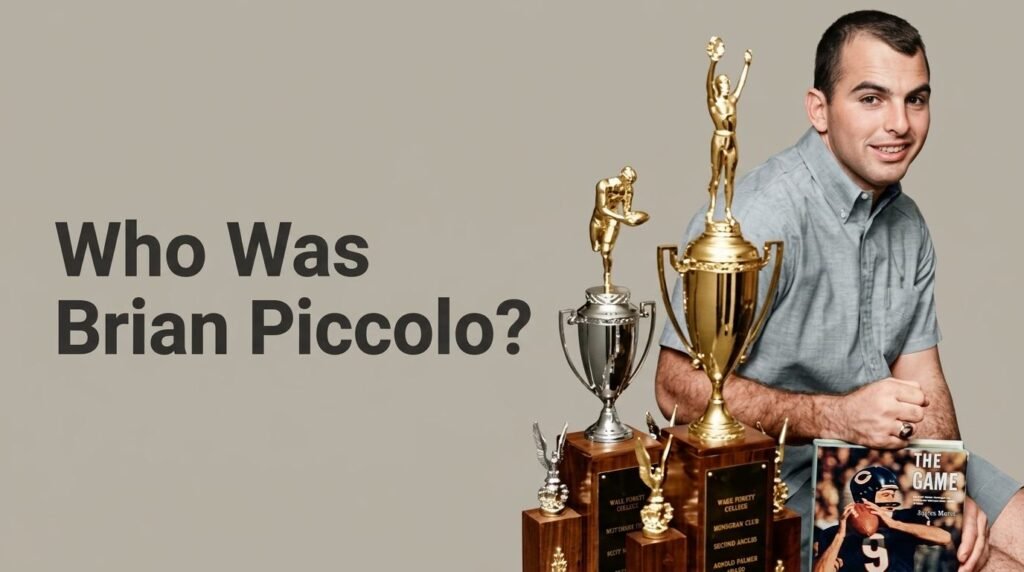
Who Was Brian Piccolo?
Louis Brian Piccolo was born on October 31, 1943, in Pittsfield, Massachusetts, and moved with his family to Fort Lauderdale, Florida, when he was three. He starred at Wake Forest University, where he led the nation in rushing and finished tenth in the 1964 Heisman Trophy voting. Even so, no NFL team drafted him in 1965, so he joined the Bears as a free agent.
He became a respected backfield player and special teams contributor, and he formed a famous friendship with Gale Sayers. Piccolo died on June 16, 1970, at age 26, and the Bears later retired his number 41 jersey. His story became a landmark in American sports history.
| Brian Piccolo Fact | Details |
| Born | October 31, 1943, Pittsfield, Massachusetts |
| College | Wake Forest University |
| NFL Team | Chicago Bears (1965 to 1969) |
| Jersey Number | 41 (retired by the Bears) |
| Illness | Embryonal cell carcinoma |
| Died | June 16, 1970, New York City |
Joy Murrath’s Marriage and Family Life
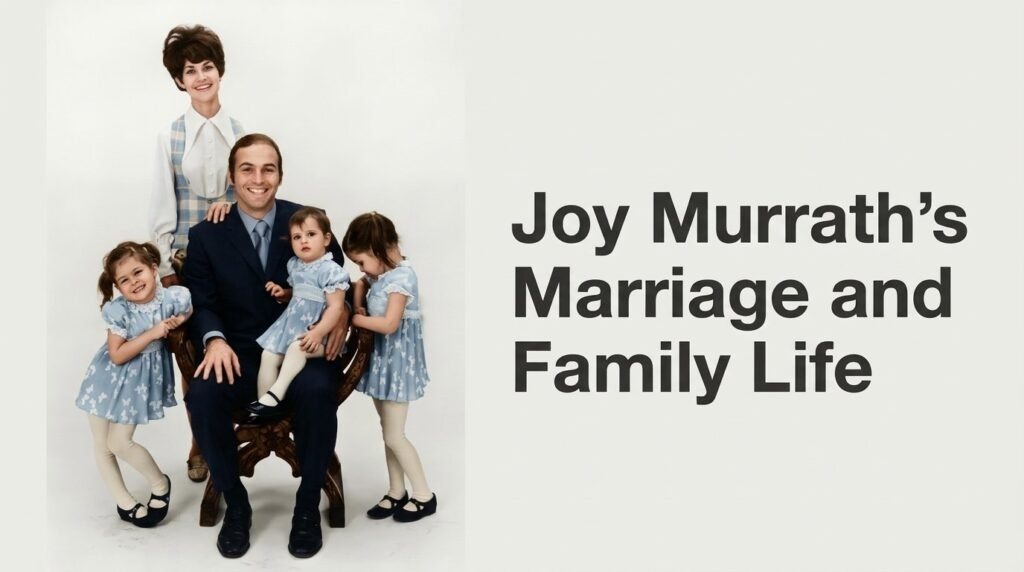
Joy and Brian were married for about five and a half years, from December 1964 until his death in June 1970. In that short time they had three daughters and built a home in Chicago. His professional career and her role as a young mother shaped most of their days together.
Their marriage is remembered mostly for how it handled the final months. Brian’s illness tested the family, and Joy was at his side through hospital stays and difficult news. The story shows a young couple facing a crisis far beyond their years.
Brian Piccolo and Joy Murrath’s Three Daughters
Brian and Joy had three daughters: Lori, Traci, and Kristi. According to the Bears, the girls were about four, three, and one when their father died. Some sources give slightly different ages, but all agree they were very young.
| Daughter | Reported Details |
| Lori Piccolo Bruno | Oldest daughter; Wake Forest graduate; reported to work in higher education |
| Traci Piccolo Dolby | Middle daughter; Wake Forest graduate |
| Kristi Piccolo | Youngest daughter |
All three daughters have taken part in tributes to their father, including a Bears anniversary event where nearly twenty members of the Piccolo family were welcomed. Their current homes and jobs are mostly private, and this article does not list locations.
Their Life Together
Brian and Joy lived in the Beverly neighborhood on the South Side of Chicago, a close community where neighbors supported one another. Brian’s humor made him a favorite among teammates, and the couple hosted friends, including Gale Sayers and his wife Linda. Sayers later said Brian’s outgoing personality balanced his own shyness.
They also lived the normal rhythm of a pro athlete’s family. There were training camps, home games, and a house full of small children. The ordinary nature of those years makes the later loss more moving.
How Joy Murrath Supported Brian During His Illness
Brian was diagnosed with embryonal cell carcinoma in late 1969, after he had trouble breathing during a game. After surgery, he fought the disease for roughly seven months. Bears owner George Halas arranged for top specialists, and the team flew Brian and Joy to New York to meet Dr. Beattie at Memorial Sloan-Kettering.
Joy was beside him as doctors delivered hard news. Author Jeannie Morris later reported that Brian and Joy grew skeptical of their doctors’ upbeat messages but felt unable to question them. Meanwhile, their daughters stayed with Joy’s parents in Atlanta so she could be at the hospital.
- Late 1969: Brian leaves a game short of breath and is diagnosed.
- Early 1970: Surgery removes a large chest tumor, followed by further treatment.
- May 1970: The family spends a week in Atlanta with Joy’s parents.
- June 4, 1970: Brian returns to the hospital as doctors say the cancer has spread to his liver.
- June 16, 1970: Brian dies at Memorial Hospital in New York.
Brian Piccolo’s Death and Its Impact on Joy Murrath
Brian Piccolo died on June 16, 1970, at age 26. Joy was left a widow with three daughters under five. She was ready to sell their Beverly home and move to Atlanta to be near her parents, according to the Chicago Sun-Times.
A neighbor, Pat Somers Cronin, helped convince her that her life and her husband’s legacy belonged in Chicago. Joy stayed and raised her girls there. That decision shaped the next five decades of her life.
Before his death, Gale Sayers accepted the George Halas Award for courage and said it belonged to Brian. Sayers later wrote that he taped Brian’s name over his own on the trophy and gave it to him, and Joy kept the trophy because it meant so much to her.
Joy Murrath’s Connection to Brian’s Song
Brian’s Song aired on ABC on November 30, 1971, and became one of the most beloved television movies ever made. James Caan played Brian Piccolo and Billy Dee Williams played Gale Sayers. The film won Emmy Awards and was remade in 2001.
The movie was based on a chapter from Sayers’ autobiography I Am Third. Joy was portrayed on screen by actress Jill Clayburgh in the original, which made her story known to a national audience. The film turned her private grief into a public memory, though she has long guarded her own privacy.
| Brian’s Song Detail | Information |
| Original Air Date | November 30, 1971 |
| Network | ABC |
| Brian Piccolo played by | James Caan |
| Gale Sayers played by | Billy Dee Williams |
| Remake | 2001 television film |
| Source Material | Gale Sayers’ book I Am Third |
Joy Murrath’s Life After Brian Piccolo’s Death
After Brian’s death, Joy focused on raising her daughters and preserving his memory. Brian had begun recording his thoughts on tape during his illness, and Joy asked Jeannie Morris, wife of Bears receiver Johnny Morris, to finish his book. Brian Piccolo: A Short Season was published in 1971.
The proceeds were originally split between Joy and the daughters and the Brian Piccolo Cancer Research Fund. The fund was created by Ed McCaskey and the Bears, and Joy became its long-time president. That work gave her loss a purpose and linked her to cancer research for the rest of her life.
Her Second Marriage and Family Life
Joy remarried around 1973 to Rich O’Connell, and she became known as Joy Piccolo O’Connell. The Chicago Sun-Times reported that she had two more children and still lived near Chicago. One daughter later described her mother as marrying a man strong enough to handle three girls and the legend of her first husband.
Some smaller websites claim that she remarried in 1971 to a man named Robert Wheeler. That claim conflicts with stronger sources and appears to be an error. The better-supported account is the 1973 marriage to Rich O’Connell.
| Marriage | Reported Details | Reliability |
| First marriage | Brian Piccolo, December 26, 1964 to June 16, 1970 | Strong |
| Second marriage | Rich O’Connell, around 1973 | Reported by several sources |
| Alternate claim | Robert Wheeler, 1971 | Weak; likely incorrect |
Preserving Brian Piccolo’s Legacy
The Brian Piccolo Cancer Research Fund has raised money for research for decades, and Joy has been closely linked to it as president. The Bears honor his memory each spring, when teammates choose players who show courage, loyalty, teamwork, dedication, and humor. In 1980, students at Wake Forest also began a cancer fund drive in his name.
The family continues to appear at tributes. On the 50th anniversary of his death, a car parade drove through Beverly, and the Bears have welcomed Piccolo family members to team events. Joy has also spoken fondly of how Brian and Gale Sayers grew to respect each other.
- Piccolo Award: Chosen each spring by Bears teammates.
- Retired number: The Bears retired jersey 41.
- Fundraising events: Including Hit the Bricks and Wake Forest drives.
- Book and film: A Short Season and Brian’s Song keep the story alive.
Joy Murrath’s Private Life Away From the Spotlight
Joy keeps a low profile. She has no verified social media accounts, and she appears mostly at memorial events and in interviews tied to the Piccolo story. Her public comments usually focus on Brian, the fund, and gratitude for the people who supported her family.
This privacy helps explain why many web pages repeat the same short list of facts. When details like her hobbies, home, or finances appear on content sites, they often have no source. Readers should be careful with such claims.
Where Is Joy Murrath Now?
Joy Piccolo O’Connell was reported to live near Chicago in a Chicago Sun-Times article, and she has stayed connected to the Piccolo Fund and Bears events. She has not published a detailed update on her daily life in recent years. This article does not share her address or location beyond the region.
Her story remains active because of anniversaries and tributes. Each year, fans recall Brian’s story, and Joy’s role as the person who carried it forward comes back into view. If you want current news, check the Brian Piccolo Cancer Research Fund and the Chicago Bears’ official channels.
Joy Murrath’s Net Worth and Financial Background
No reliable source gives a net worth for Joy Murrath. She is not a business owner or entertainer, and she has spent decades in a charitable role that is typically unpaid or non-profit. Websites that list a dollar figure usually do not explain how they calculated it.
| Possible Financial Factor | Status |
| Share of A Short Season proceeds | Reported, amount not public |
| Charity role with the Piccolo Fund | Non-profit leadership |
| Husband’s NFL earnings | Modest; not a source of lasting wealth |
| Personal net worth | Not verified |
The honest summary is that her finances are private. It is also worth remembering that her public story is about family and legacy, not money.
Interesting Facts About Joy Murrath
- Joy Murrath was Brian Piccolo’s high school sweetheart before she became his wife.
- They married on December 26, 1964, and he signed with the Bears three days later.
- She became a widow with three daughters aged about one to four.
- A neighbor helped convince her to stay in Chicago instead of moving to Atlanta.
- She was played by Jill Clayburgh in the 1971 film Brian’s Song.
- She remarried around 1973 and became Joy Piccolo O’Connell.
- She has long been associated with the Brian Piccolo Cancer Research Fund.
Conclusion
Joy Murrath’s story is one of love, loss, and quiet strength. She was Brian Piccolo’s high school sweetheart and wife, a young mother who stayed beside him through his illness, and later a woman who rebuilt her life in Chicago. As Joy Piccolo O’Connell, she has helped keep his legacy alive through the Piccolo Fund, anniversary tributes, and her family.
For readers searching for Joy Murrath, Brian Piccolo’s wife today, the key facts are her 1964 marriage, her three daughters, her second marriage, and her work with the fund. Details like her age, finances, and daily life remain private, so unsourced claims should be treated with caution.
Frequently Asked Questions
What Happened to Brian Piccolo’s Wife, Joy Murrath?
After Brian died in 1970, Joy stayed in Chicago, raised their three daughters, and later remarried. She became president of the Brian Piccolo Cancer Research Fund.
Did Joy Murrath Remarry After Brian Piccolo’s Death?
Yes. She reportedly married Rich O’Connell around 1973 and became Joy Piccolo O’Connell. She has two more children.
How Old Were Brian Piccolo’s Daughters When He Passed Away?
The Bears say they were about four, three, and one. Some sources give slightly different ages, but all agree they were very young.
Who Covered Brian Piccolo’s Medical Expenses?
One Bears history source says the team paid his medical bills. Halas arranged top specialists and the Bears flew Brian and Joy to New York, though full details are not documented.
Where Are Brian Piccolo’s Daughters Today?
Lori, Traci, and Kristi have taken part in Bears tributes, but their current homes are private. Lori and Traci are Wake Forest graduates.
What Were Brian Piccolo’s Final Words?
No reliable source records his last words. The famous quote, “I love Brian Piccolo,” was said by Gale Sayers in his May 1970 award speech.