
Many parents searching for the Tristan name meaning in the Bible want to know if this popular name has scriptural roots. It is a fair question, especially for families who want a name with both style and spiritual weight, particularly when naming a child feels like a meaningful decision.
The honest answer is a little more nuanced than a simple yes or no. This guide explains where Tristan actually comes from, what it symbolizes, and why it still resonates with many Christian families today, even without a direct biblical origin. By the end, you will understand exactly what the name represents and how it fits within a faith centered home. 📖
Is Tristan a Biblical Name?
To answer directly, Tristan does not appear anywhere in the Bible. It is not found in the Old Testament or New Testament as a person, place, or term, despite how often the search comes up online.
This surprises many people, since the name has a strong, noble sound often associated with faith based naming trends. Understanding where Tristan truly comes from helps explain why it still feels spiritually meaningful to so many parents, even without appearing in a single verse of scripture.
Tristan’s Connection to Historical and Literary Tradition
Rather than biblical history, Tristan’s roots trace back to Celtic legend, specifically the Pictish name Drust or Drustan, long before it took on any spiritual associations at all.
- The name later evolved into Tristan through medieval French storytelling.
- It became widely known through the tragic romance of Tristan and Iseult.
- The tale later merged into the broader Arthurian legend collection, cementing its place in Western literature.
This literary history is separate from scripture, but it shaped the emotional depth people now associate with the name, especially the themes of love, sacrifice, and sorrow found in the original legend.
Tristan in Celtic and Christian Culture
Although not biblical, Tristan has long existed alongside Christian naming traditions in European history, particularly across medieval France, Wales, and Cornwall.
Medieval societies where the name spread were often deeply Christian, which allowed Tristan to be used comfortably within church communities, even without appearing in scripture itself. Many names from this era followed a similar pattern, blending local legend with everyday Christian life.
Christian Meaning of the Name Tristan
The Christian meaning of Tristan is more cultural than scriptural, shaped by centuries of use within Christian families rather than direct biblical text. This distinction matters, since cultural meaning can still carry real emotional and spiritual weight.
Many Christian parents choose names for their sound, values, or emotional resonance rather than requiring a literal Bible reference, and Tristan fits comfortably into that category alongside many other beloved family names.
Tristan Name Origin
Understanding the Tristan name origin clarifies why the biblical connection often gets assumed, especially since the name sounds similar to other well known religious, royal, or noble names throughout history.
- Tristan originates from the Celtic name Drust or Drustan, meaning noise or tumult.
- Later French influence linked it to the Latin word tristis, meaning sad or sorrowful, adding an entirely new emotional layer to the name.
- The name gained widespread popularity through Arthurian legend rather than through any religious or scriptural text.
| Origin Element | Meaning |
| Celtic root (Drust) | Noise or tumult |
| Latin influence (Tristis) | Sad or sorrowful |
| Literary association | Tragic hero, Arthurian legend |
| Modern usage | Popular given name across Western countries |
This table makes it easy to see how two very different influences, one Celtic and one Latin, shaped the name into what it is today.
Spiritual Symbolism of Tristan in Christianity
While not biblical, Tristan carries symbolic weight that many Christian parents connect to their faith, often drawing loose parallels between the name’s story and their own personal or spiritual journey through life.
- Sorrow transformed into strength, echoing themes found throughout scripture.
- Loyalty and sacrifice, values central to many biblical stories.
- Quiet resilience, often associated with spiritual growth through hardship.
These themes are why the name feels spiritually rich, even without a direct biblical citation backing it up in scripture.
Names Similar to Tristan in the Bible
Although Tristan itself is absent from scripture, some biblical names share a similar emotional meaning worth exploring for comparison and reflection.
- Mara, meaning bitter or sorrowful, appears in the Book of Ruth.
- Job, though not linguistically similar, shares the theme of suffering and endurance.
- Naomi’s story reflects the same emotional depth often associated with Tristan’s meaning.
These names offer a scriptural parallel for parents drawn to Tristan’s emotional symbolism, even though the names themselves are not linguistically related.
Biblical Values Connected to the Name Tristan
Even without appearing in scripture, Tristan aligns with several important values found throughout biblical teaching, which is likely why so many Christian families still feel genuinely drawn to it.
- Faithfulness during difficult seasons
- Courage in the face of adversity
- Love that remains steady despite hardship
- Humility paired with quiet strength
Many parents feel these associations are enough to justify the name within a Christian household, choosing meaning over a literal scriptural reference.
Is Tristan a Good Christian Name?
Yes, Tristan can absolutely be a good Christian name, even though it does not come directly from the Bible or appear in any biblical genealogy.
Christian naming traditions have never been limited strictly to scriptural names. Many widely used Christian names come from historical, cultural, or literary sources, and Tristan fits naturally into that long standing pattern shared by countless other beloved names.
What Does Tristan Represent in Christian Faith?
Within a Christian context, Tristan often represents resilience shaped through sorrow, along with loyalty and quiet strength, qualities that resonate deeply within many faith traditions.
Parents frequently choose the name to reflect a hope that their child will grow into someone steady, faithful, and strong through life’s inevitable challenges, much like biblical figures who endured hardship with grace.
Tristan Name Meaning in the Bible: A Catholic Perspective
From a Catholic perspective, Tristan is not recognized as a saint’s name or biblical figure, but that does not disqualify it from religious use in any meaningful way.
Catholic naming traditions often allow names chosen for personal or family significance, especially when paired with a confirmed saint’s name for religious ceremonies like baptism or confirmation.
Tristan Name Meaning and Numerology
Beyond faith based interpretations, numerology offers another lens some parents explore when researching Tristan, even though it sits outside traditional religious teaching.
| Category | Common Interpretation |
| Numerology number | Often linked to introspection and depth |
| Personality theme | Thoughtful, quietly determined |
| Elemental association | Frequently tied to water, symbolizing emotion |
| Common nickname | Tris, often used for shorter everyday use |
While numerology is not religious in nature, some families enjoy exploring it alongside spiritual meaning simply as an additional layer of interest, not as a replacement for faith.
Famous People Named Tristan
Several notable public figures carry the name Tristan, which has helped its popularity grow steadily over recent decades across many countries.
- Public figures in entertainment and sports have helped popularize the name.
- Its use in modern media keeps the name feeling current and relevant.
- Fictional characters named Tristan often reflect themes of loyalty and quiet strength.
- Athletes and musicians sharing the name have added to its modern day appeal.
This visibility has helped the name remain popular among parents from many different backgrounds, faiths, and cultural traditions around the world.
Tristan Name Personality
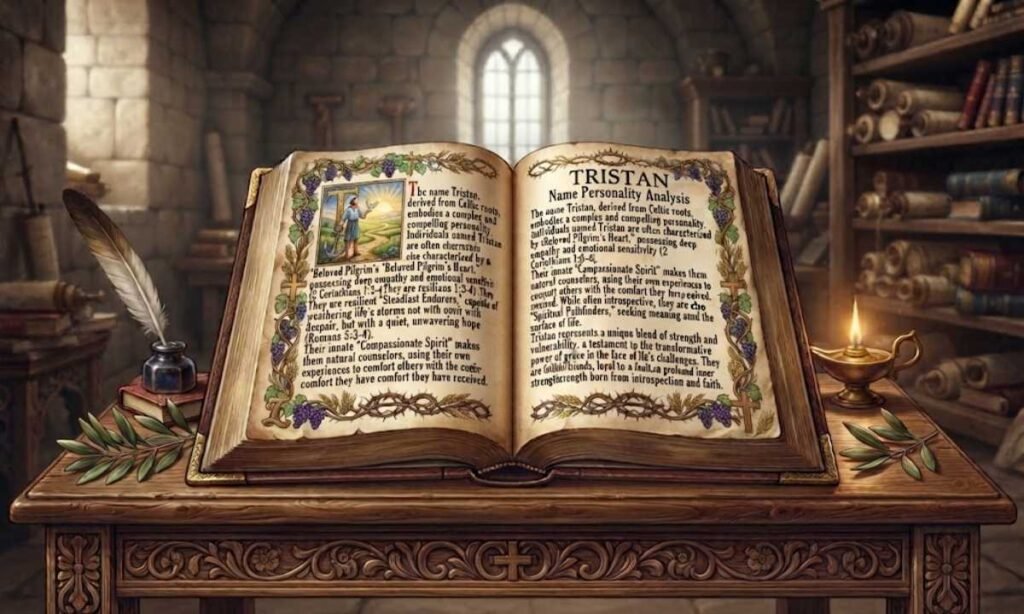
People named Tristan are often described using consistent personality traits, based on common cultural perception rather than any scientific data or guaranteed outcome.
- Thoughtful and introspective by nature
- Loyal to close friends and family
- Quietly determined, even during difficult times
- Emotionally deep, often reflecting before reacting
- Naturally protective of the people closest to them
These traits are based on general perception rather than guaranteed outcomes for every individual, since personality is always shaped by far more than a name alone.
How to Pair Tristan With a Biblical Middle Name?
Many parents who love Tristan but still want a direct scriptural connection choose to pair it with a biblical middle name instead, giving the full name both style and scripture.
- Tristan James, combining quiet strength with a name meaning supplanter
- Tristan Elijah, pairing quiet resilience with the powerful meaning my God is Yahweh
- Tristan Micah, blending sorrow’s strength with the meaning who is like God
- Tristan Noah, joining tumult with a name that symbolizes rest and lasting peace
This approach lets families enjoy the sound and symbolism of Tristan while still anchoring the full name to scripture in a way that feels personally meaningful.
Does Tristan Appear in Any Religious Texts at All?
Outside the Christian Bible, Tristan does not appear in other major religious scriptures either, including the Quran, Torah, or other widely recognized sacred texts.
Its origins remain firmly rooted in Celtic legend and medieval European literature rather than any sacred religious text across major world traditions, which reinforces its cultural rather than scriptural identity.
Common Misconceptions About Tristan’s Biblical Origin
A few recurring misunderstandings explain why so many people continue to assume Tristan has scriptural roots, even after learning the true history.
- Confusing Tristan with similar sounding biblical names like Tobias or Titus
- Assuming any name with a strong, noble sound must come from scripture
- Mistaking Tristan’s use in Christian families as proof of biblical origin
- Overlooking the difference between cultural Christian use and actual biblical text
- Assuming popularity within Christian communities automatically implies scriptural origin
Clearing up these misconceptions helps parents make a more informed naming decision based on accurate history rather than assumption.
Frequently Asked Questions
Is the name Tristan mentioned in the Bible?
No, Tristan does not appear anywhere in the Bible as a person, place, or term, despite the common assumption.
What does the name Tristan mean spiritually?
Spiritually, Tristan is often associated with sorrow transformed into strength, quiet resilience, and steady faithfulness.
Can Christians use the name Tristan for their child?
Yes, many Christian families choose Tristan for its meaning and sound, even without a direct scriptural origin behind it.
What biblical character is most like Tristan?
Naomi, who called herself Mara, shares a similar theme of sorrow and eventual renewal found in her story.
Is Tristan a strong name in Christianity?
Yes, its themes of loyalty and resilience align well with values commonly taught and celebrated within the Christian faith.
Does Tristan have a patron saint in Catholic tradition?
No, Tristan is not linked to a recognized saint, so families often pair it with a saint’s name for baptism instead.
Why do so many people search for a biblical meaning behind Tristan?
Its strong, meaningful sound leads many parents to assume a scriptural origin that simply does not actually exist.
Conclusion
The Tristan name meaning in the Bible is one of the most common searches for this name, but the honest answer is that Tristan does not appear in scripture at all. Instead, its roots trace back to Celtic legend and medieval literature, later shaped by Latin influence and the romance of Arthurian legend.
Despite this, the name carries real spiritual weight through themes of sorrow, loyalty, and quiet strength that align closely with Christian values.
Many families continue to choose Tristan not because of a direct biblical reference, but because of what it represents emotionally and spiritually within their own home. Understanding its true origin only adds depth to why the name continues to resonate with so many parents today, decades after it first became popular.
Whether chosen for sound, symbolism, or personal meaning, Tristan remains a name rich with quiet significance, faith, and history behind every letter. ✨